LEATHER TANNING STEPS
The tanning process of leather and animal skin is done in two ways. One method uses chemical materials and the other method uses plant materials. Here we take a brief look at the tanning process with the chemical materials along with the methods.
The first step consists of separating the skin, which can be done in three ways:
a. Traditional method
b. Industrial method
c. Balloon method
After removing the skin by following one of the methods mentioned above, soak the skin in salt and then expose it to free air. Then to make sure its completely dry, expose it to hot air or direct natural light. The skin is now ready for the next stage of tanning.
At this stage, some parts of the animal skin such as ears, eyes, etc. that have basically no involvement in in the leather making process are removed.
They are removed from the skin, of course, but in some cases if we talk about the skin of tiger, fox, etc. they are tanned along with those parts for beauty or decor purposes. The usual unwanted parts of the animal’s body are not separated and the skin is tanned completely.
Such skins make excellent decorative pieces and it is not widely common to see such leather products made and sewn.
At this stage, the skin is thrown into the water to remove the waste materials.
Chemicals such as salt is added to the water to separate the skin protein. The amount of protein that comes out of the skin determines how high quality the leather is than other consumables. An antibacterial such as chlorine is also used in this stage. Sodium sulfide or sodium tetrasulfide can be also used. They help to weakens the hair follicles.
At this stage, the non-fibrous proteins present in the skin are collected by soaking the skin in a solution of lime.
This process is carried out by a detachment machine made of two grooved metal rollers and another one made of plastic.
At this stage, the wool or hair on the animal skin is separated and destroyed.
This process is done by hydrolysis. The skin is hydrolyzed to form a molecule of hydrogen sulfide | sodium gene, which accelerates the hair making it more fragile and weak.
At this stage, the leftover lime on the skin from the previous stage should be separated by using chemical materials such as ammonium salts, sodium bisulfite and sulfuric acid. If lime isn’t removed from the leather completely, serious problems may arise in the painting process and the leather will not color well.
Also, not removing lime well from the skin will eventually cause brittleness and dryness in the leather.
In this stage, we alkalize the skin. Alkalizing the skin makes the leather higher in quality and soft to touch.
This process takes place when the skin is soaked in an alkaline solution with ammonium salts, which causes the amount of enzyme.
As a result of alkalizing, the skin becomes smooth with a clean surface and excellent flexibility.
At this stage, the remaining fat on the skin surface must be removed yet again because the skin of some animals like sheep, it has a lot of fat, so the fat is converted into soap by sodium hydroxide.
Then it is washed with water.
This stage is also called salambouring. Basically, in this stage we use alkalis to bring the skin to its original size. Here we put the skin is in an acidic solution that contains salt. Due to its exudative properties, salt prevents the swelling of the fibers in skin, hence preventing the skin to swell.
In this way, the skin remains smoothened and semi-tanned.
At this stage, the leather is sliced up by using special machines to cut thick slabs of leather, they are in the form of rollers. The fleshy and vulnerable parts of the leather are shaved off and leather is cut up to the desired level of thickness
They also grind and sand the leather. All of this is done to homogenize the leather.
At this stage, the obtained leather is dyed.
The color used to stain natural leathers can be categorized in two types.
A: Organic dyes:
These dyes are soluble in water, such as aniline dyes.
Organic dyes include aniline, anion and nitrogen dyes.
B: Mineral dyes:
They are insoluble in water and have a high penetration power. These include colors as well.
It is noteworthy that after dyeing the leather to the leather surface lead chromate and zinc oxide can be obtained.
The leather is lubricated to maintain properties such as quality and softness.
We are proud to have been able to introduce leather and the art of leather embroidery in recent years.
To occupy a favorable position in most families, people used to associate themselves with leather work.
Men working with leather were considered to be over half of the active class.
Back then, women of the society were a stranger to this work and never imagined one day they will be familiar and more aware of all sources of income. It was a gift we were able to give present women and offer with love to not waste it.
Since, in principle, leather tanning factories are limited in number and far from cities and villages.
Livestock farms are responsible for the transfer of skin separated from the animal body to the factory, this will be time consuming.
Dip one foot into warm paraffin 2 times, pausing between layers to allow them to dry.
Give it time to dry and get rid of the bad smell.
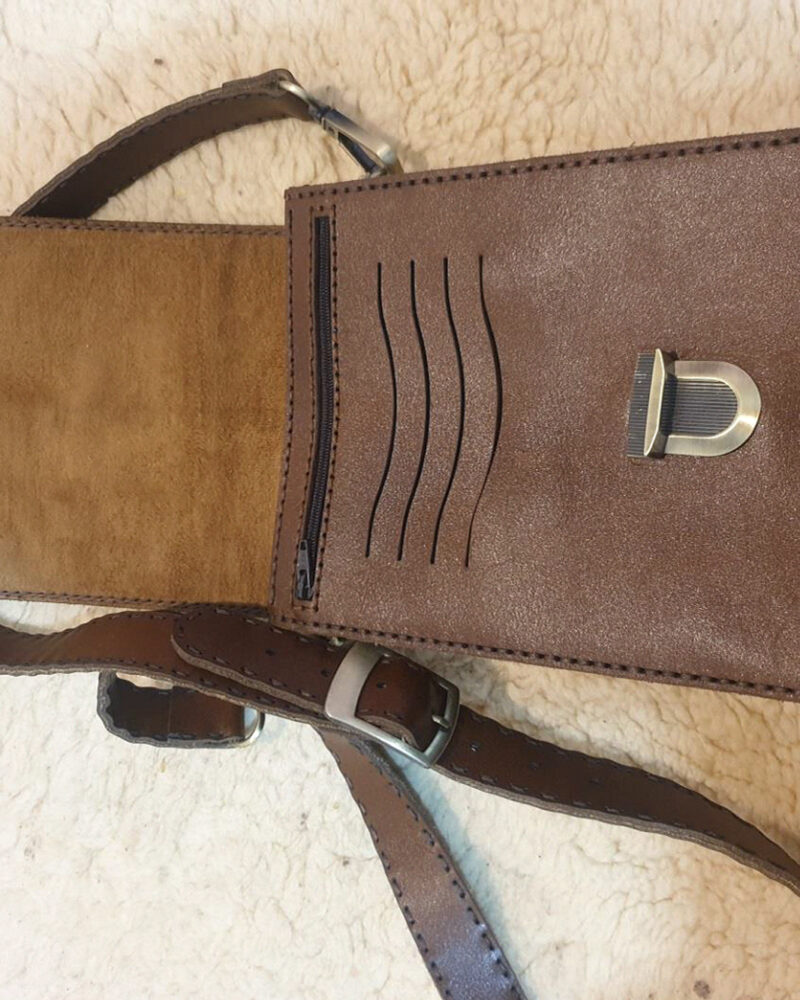
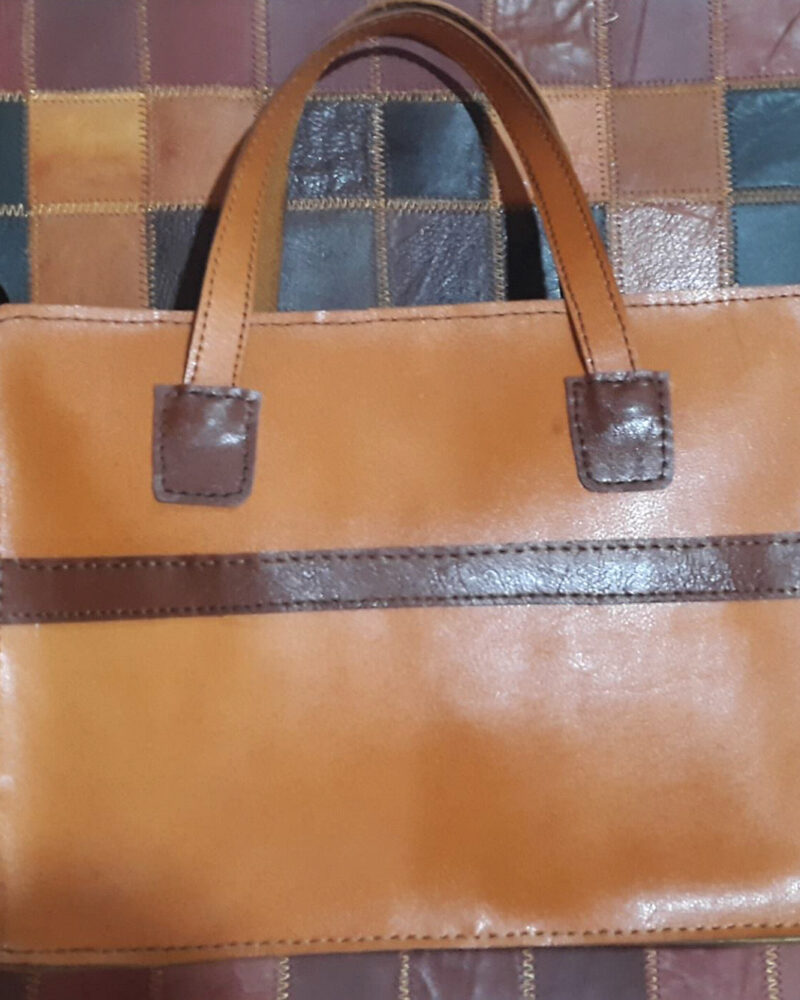
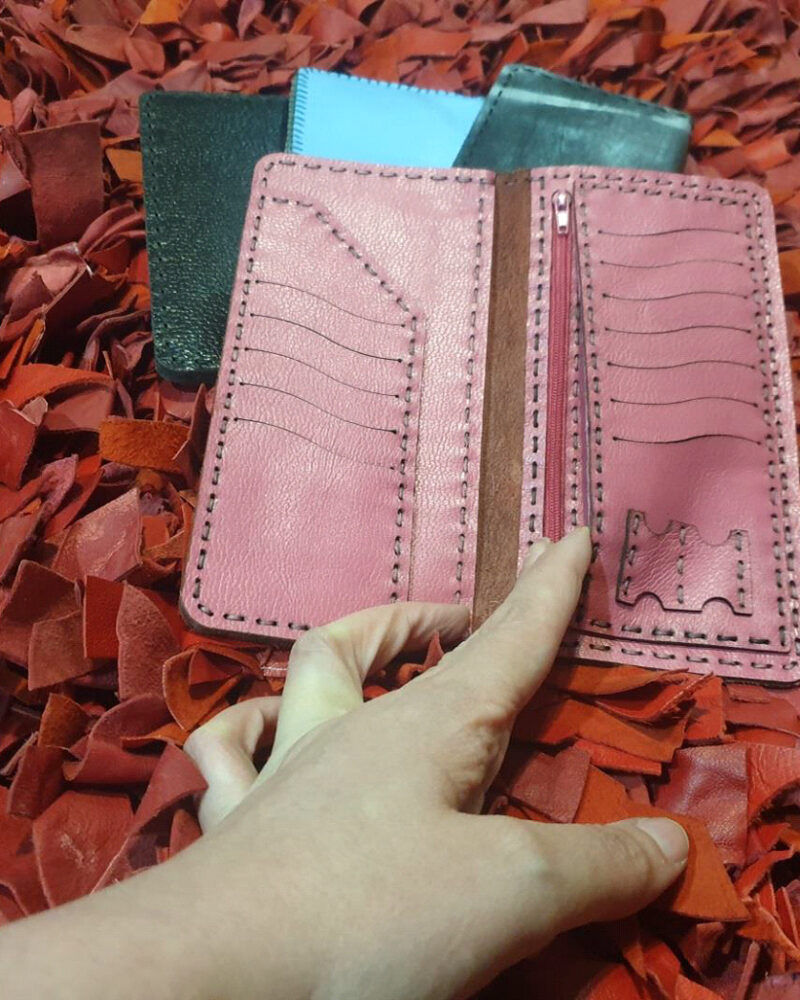
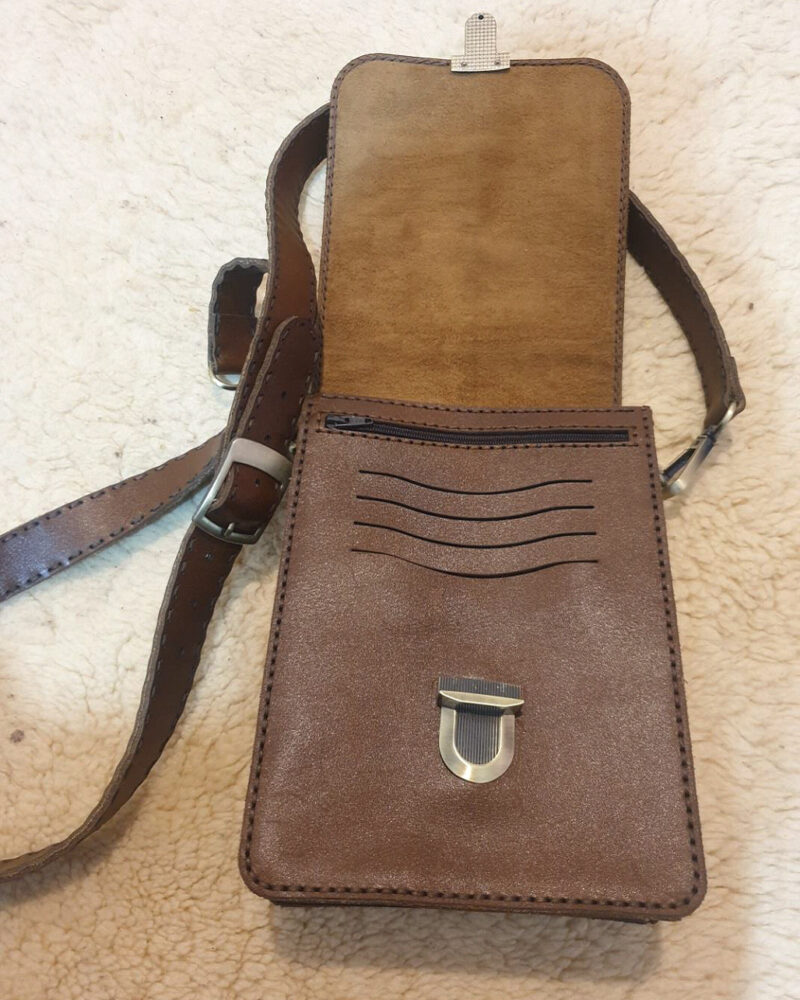
How are handmade bags sewn?
Before explaining how and when to sew handmade bags, there is a brief explanation of this art:
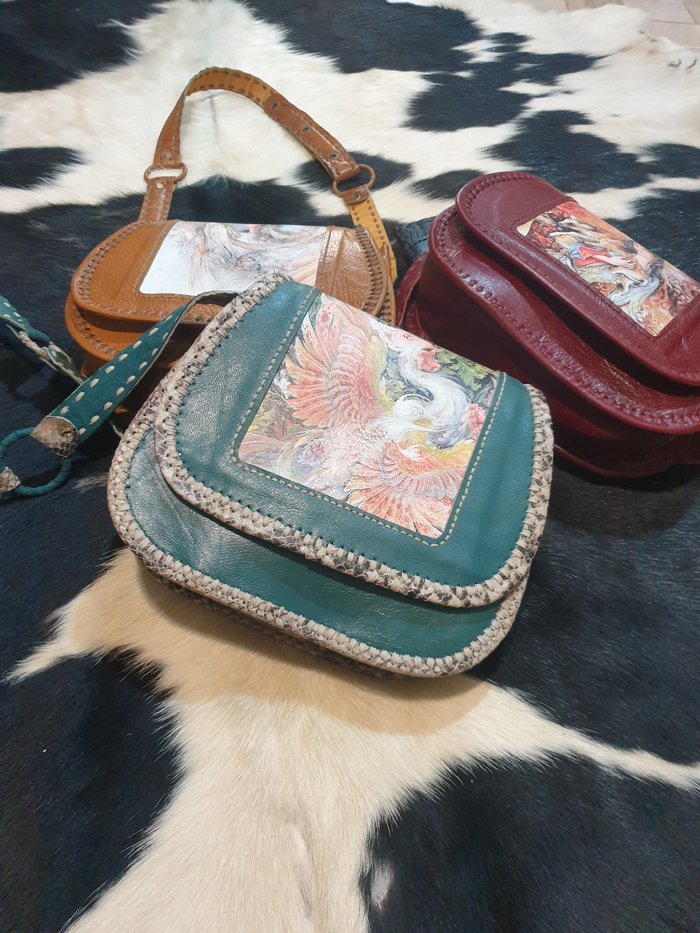
Let’s shake hands about this art. The name of this art is traditional seraji and it has been done in Iran for many years.
All the steps mentioned here are of sewing a bag or any other product by hand and without the use of any machinery.
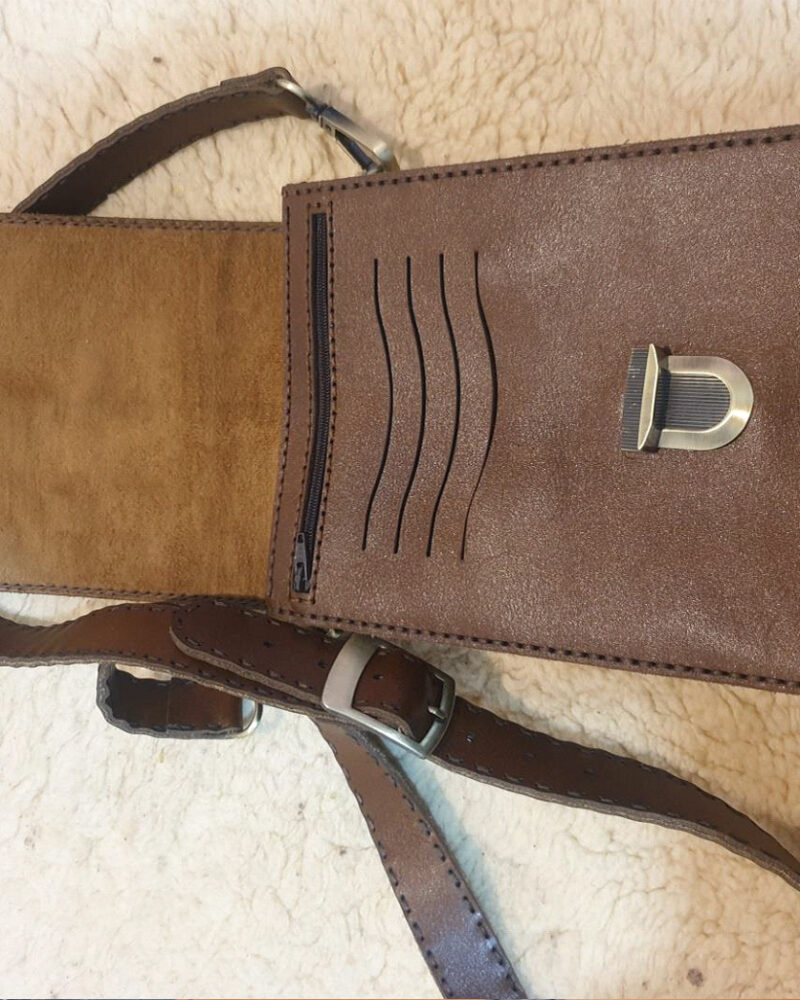
To sew the bag, first we draw the desired design, then its dimensions are considered and a pattern is drawn, then the desired pattern of work is transferred to the leather by a suitable pen (jelly pen). The next step is by a ruler. And the cutter of the bag is cut. Next, we glue the zippers with iron glue in the place of the designed pockets. After rubbed on, allow the glue to dry for a short time, then attach the liner or zipper. When the zippers come to work, we have to make a bag for the pockets of the bag, which is the same as lining, and we make a pocket for the bag with the liner. The next step is to wrap the bag and pierce the edges of the work to sew the finish. It should be noted that each bag has its own sewing steps and descriptions. We have given a brief explanation about this art here.
Items needed
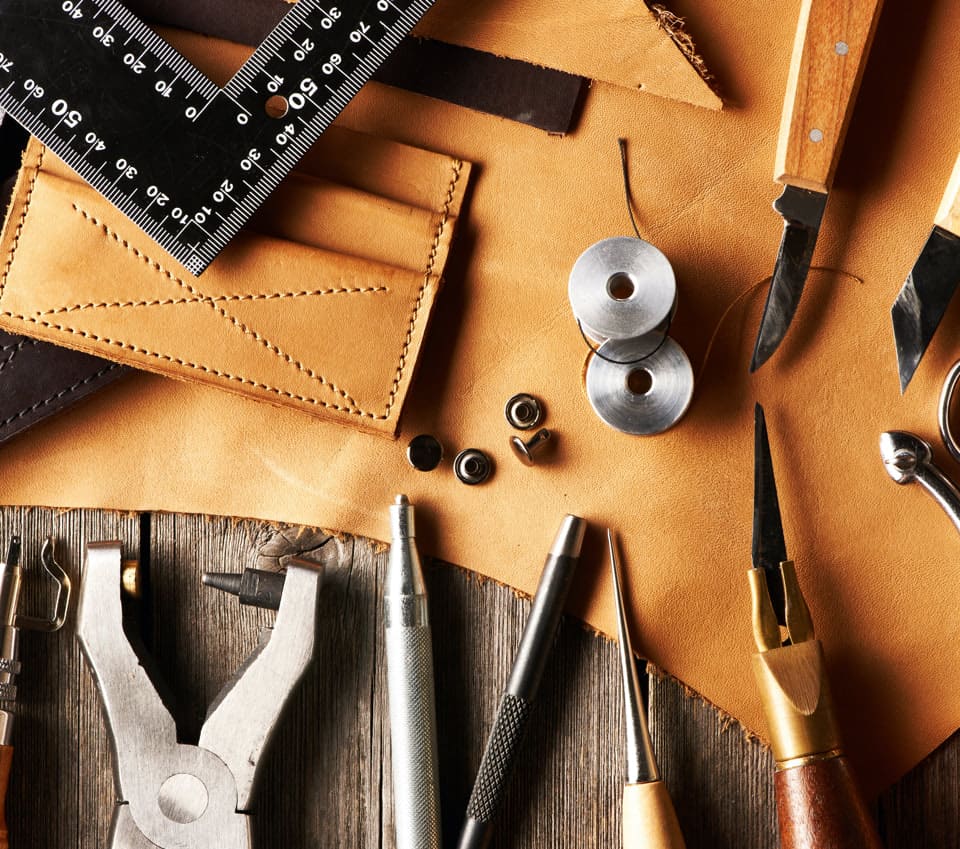
The basic tools used in traditional seraglio are
Sombeh
Sambeh is a tool made of steel to make holes for sewing in places where sewing is necessary. We have two types of pegs, one type is used for sewing and the other type is decorative pegs. The candles that are used for sewing have sizes from 5.0 starting to sizes 0 or 6 or even bigger that each candle with a special number is designed for a specific job. It has applications.
Fist
A fist is a type of hammer made of cast iron that pierces leather with the help of a hammer. The fist is designed so that the craftsman does not get tired of working for a long time.
Yarn
The yarn used in the bag embroidery industry is waxed by hand. Waxed yarn is a yarn that is impregnated with beeswax so that it is stronger and does not cut too quickly. Also, wax causes the strength and life of yarn to multiply and does not rot. It also has a relatively long life in terms of natural leather. To be. The thickness of the waxed yarn is about 3 mm. This feature is another advantage of this yarn.
Scissors
In handicrafts and hand embroidered bags, the scissors used are definitely different. In the art of hand embroidery, special scissors are used to cut leather and they are very sharp and strong. Of course, it is worth mentioning that we have two types of scissors.
First category: Industrial scissors
These scissors are produced by machines and factories. These scissors are very high in quality and also have a longer life.
Second category:
These scissors are handmade scissors.
Board work
In our bag embroidery work, holes are made by the hammer and the fists where it should be sewn. The punches also protect the skin from being damaged or scratched.
Needle
The needle used in handicraft embroidery bags has a larger diameter and the hole of this needle is large because the embroidered bag uses waxed yarn that is thicker than other yarns and also these needles do not have a sharp point because we do not use the needle for piercing and the sewing place is already pierced by the fist and the needle is used only to pass the thread.
Ruler and cutter
To cut the bag in hand bag embroidery, we make smooth cuts with cutters and metal rulers to cut completely smoothly and accurately, and scissors are used for arched cuts.
We have given a brief explanation about the basic tools here. Of course, the tools for the bag embroidery profession are much more and beyond these few tools that we have mentioned here.